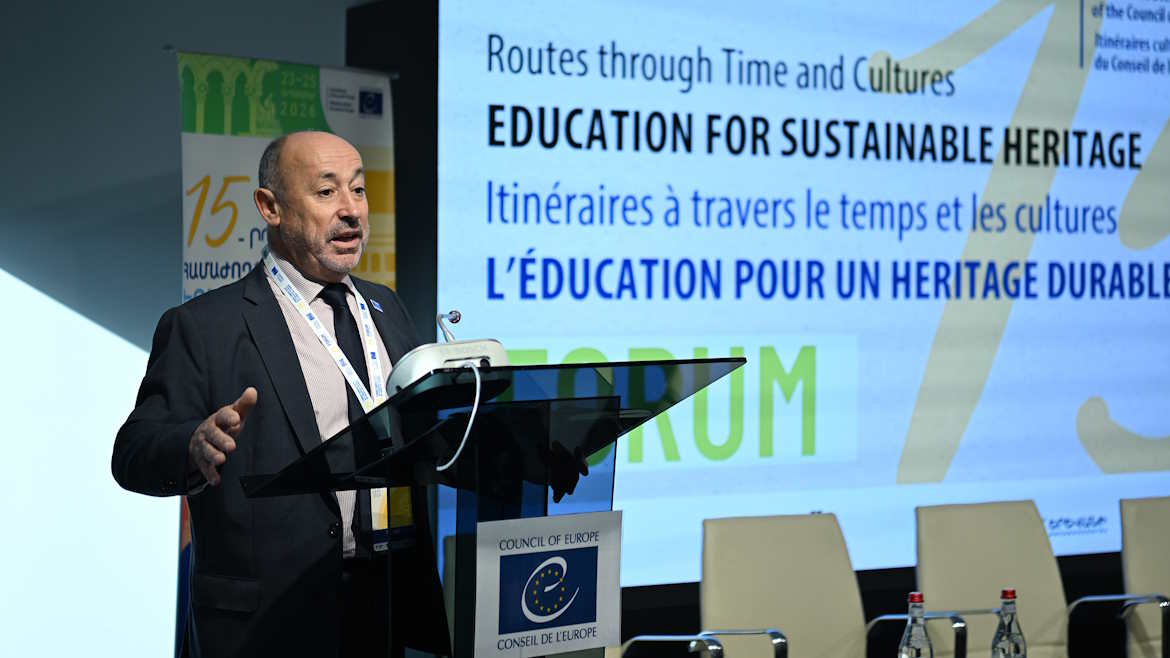
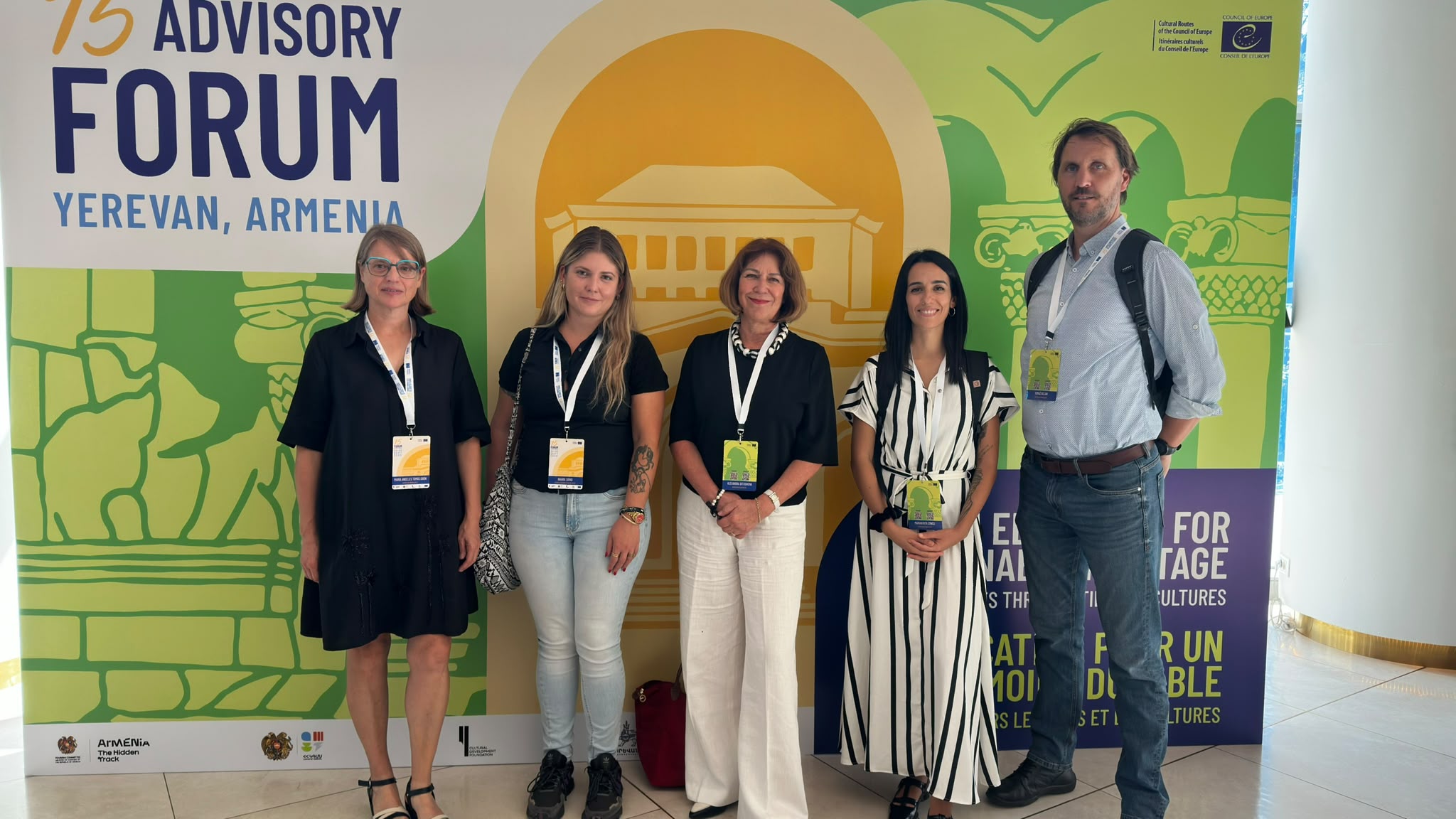
From 23 to 25 September 2026, Yerevan, Republic of Armenia, hosted the 15th Advisory Forum on the Cultural Routes of the Council of Europe, bringing together more than 250 participants from across Europe and beyond.
During the Forum, the European Mining Routes of Saint Barbara Federation – MINES.B officially presented the candidacy of the European Mining Routes for certification as a Cultural Route of the Council of Europe.
The proposal was presented by Prof. Alexandra Bitušíková, Chair of the MINES.B Scientific Committee, who outlined the objectives, structure and European dimension of the network. The presentation was positively received by Forum participants.
The European Mining Routes candidacy was presented alongside six other initiatives, all reflecting the diversity of Europe’s cultural heritage.
Education and sustainable heritage
The 2026 Forum, entitled “Routes through Time and Cultures: Education for Sustainable Heritage”, focused on the role of education in safeguarding, interpreting and transmitting cultural heritage.
Policy discussions, thematic sessions and workshops addressed key issues including cultural and educational ecosystems, digital tools, formal and non-formal learning, accessibility, lifelong learning and learning through travel.
A central message of the Forum was the need to strengthen the role of education within sustainable heritage management and within the Cultural Routes of the Council of Europe Programme.
This approach is fully consistent with the objectives of MINES.B. The European Mining Routes aim to preserve and promote Europe’s mining heritage while supporting education, research, international cooperation and the transmission of knowledge and memory to future generations.
A European network for mining heritage
The European Mining Routes connect territories shaped by a common mining history and by its economic, social and cultural legacy.
Mining sites, industrial landscapes, museums, archives, historic routes and local traditions form a shared European heritage that crosses national borders.
Through MINES.B, this heritage is promoted as a basis for international cooperation, cultural education, community involvement and sustainable tourism.
The certification process continues
The presentation in Yerevan marks an important step in the certification process.
Over the coming months, the candidacy will undergo an independent evaluation, including an assessment of the network and its activities. The process will then continue through the relevant bodies of the Enlarged Partial Agreement on Cultural Routes of the Council of Europe (EPA).
MINES.B will continue working with its members and partners to strengthen the network and further develop the European Mining Routes project.
The objective remains clear: to give Europe’s mining heritage a shared European framework and to strengthen cooperation between territories, institutions and communities.